Follow us on Google News
Get the latest updates directly in your Google News feed
In thisFandomWireVideo Essay, we explore the distinct style of Christopher Nolan.

Check out the video below:
What Makes Christopher Nolan Unique
The Dark Knight.Inception.Oppenheimer. All critically acclaimed, financially successful, and seemingly disparate blockbusters united by the unique and instantly recognizable directorial sensibility of Christopher Nolan. Though his first feature film,Following, hit theaters in 1998, Nolan’s career truly began in the early 2000s with films likeInsomnia,The Prestige,andBatman Begins. And his star would continue to shine brighter and brighter from there.
Over the course of 12 feature films thus far, Christopher Nolan has become an institution unto himself. His films frequently grace “Best of All Time” lists, they’ve collectively grossed fivebilliondollars and counting at the worldwide box office, and have consistently granted him Best Director and Best Picture nominations at the Academy Awards. But what is it about Nolan’s style that makes him so uniquely compelling? In a theatrical landscape and overall economy where expensive trips to the movies are becoming harder and harder to justify for most people, what is it about this director’s work that keeps drawing audiences back to the theater despite, with one obvious exception, no recognizable properties or franchises under his belt?

The key elements of Nolan’s style can be essentially broken down into three major components. His use of time, the way he grounds fantastical elements in reality, and his emphasis on the technical craft of filmmaking above all else. So grab your Batpod and prepare for a non-linear journey through time as we dive headfirst into the distinct style of Christopher Nolan.
Time is an extremely important element in almost all of Nolan’s work.Following,Memento, andDunkirkall deliberately tell their stories out of order, same withOppenheimerand evenBatman Beginsto a lesser extent.InceptionandInterstellarplay more directly with time within the text of the plot. And then of course there’sTenet, a film that almost seems to exist solely because of a self-imposed challenge to make an entire movie out of one single-time gimmick. Christopher Nolan even stated in a 2020 interview with NPR thatTenet’s inversion mechanic came from how he “always harbored this desire to create a story in which the characters would have to deal with [time] as a physical reality.”
But why do this at all? Why not simply tell the story in its chronological order? Well, in the case ofFollowing,Batman Begins, andOppenheimer, the use of a post-ending framing device and parallel storylines help to build anticipation for the story as a whole. We know what’s coming, or at least we have an idea of it, but the fun comes from piecing together how we get there. As forMementoandDunkirk, the nonlinear storytelling allows the audience to better relate to the characters; since in both films, neither group has a complete grasp of what happened until the very end.
With the three sci-fi films, the answer is slightly more complicated. Well, it’s complicated forInceptionandInterstellarat least. InTenet, the distortion of time is fairly straightforward in its use. That isn’t to say that it’s simplistic or always easy to follow. ButInterstellarandInceptionboth use time to demonstrate the more abstract nature of their respective worlds.Inception’s dream realm exists outside of the normal flow of time, constantly moving faster or slower depending on what’s going on, utilizing the distorted nature of time within dreams to further emphasize its surreality.Interstellar’s time travel turns a seemingly linear timeline into an extradimensional space in and of itself, allowing individuals to exist in between layers of reality and pop in and out of various points in time. This serves to drive home the “Nothing is impossible” message seen throughout the film. If time itself can’t hold you back, what can?

More collectively speaking, Nolan’s use of nonlinear and generally unorthodox timelines force the audience to critically engage with the material and think about how the world of the narrative operates in a way that only the medium of cinema can truly manage. Or as the man himself put it in that aforementioned NPR interview, “It’s one of the things the camera can do. It can gift us with this look at the world we live in in a completely different way that never existed before the camera came along.”
Grounding Fantasy In Reality
This emphasis on critical thinking aids Nolan’s reputation as the leading provider of the thinking person’s blockbuster, a reputation only further reinforced by the way he approaches fantastical elements in his stories. InTenetandInsomnia, Nolan takes the pulpy and often over-the-top spy and detective genres and strips them down to their component parts.DunkirkandOppenheimerare very much focused on the real horrors of war, as opposed to the spectacle-driven fantasies seen in other war films. However, the most obvious examples of how Nolan grounds fantasy in reality come fromThe Prestigeand his one major franchise: theDark Knighttrilogy.
The Prestigeis a film about two rival stage magicians, stage magic being a profession all about misdirection and tricking the audience into falling for an obvious lie. The film breaks down the exact real-world mechanics of how each trick is done and the narrative exposes how the tricks and the profession itself manipulate the viewer through very real psychological techniques. Granted, it’s also the movie where Nikola Tesla invents cloning, but that’s the exception that proves the rule.

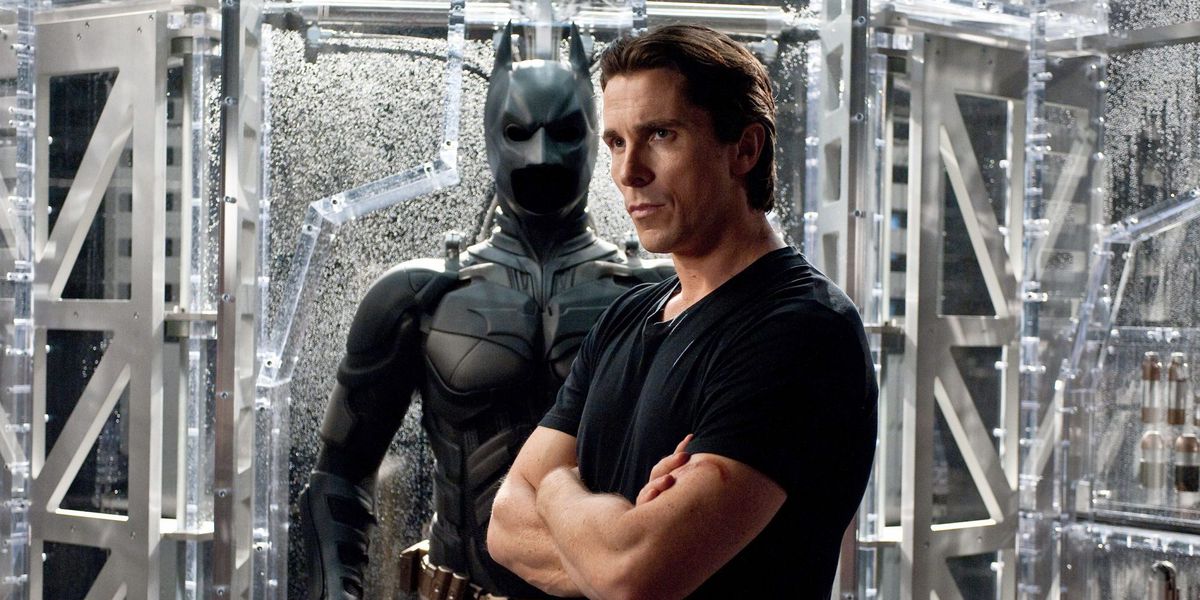
When handed the reins of Batman, Nolan took one look at the campy and cartoonish direction taken by the Schumacher films and immediately turned as far away from it as possible. The toyetic gadgets, vehicles, and costumes were replaced by personalized, but very much realistic, military equipment. The catchphrase hurling, bombastic bad guys were also done away with in favor of terrifying killers grounded in the realm of realism. And the goofy child sidekicks were done away with entirely, save for a shoehorned final twist inThe Dark Knight Rises.
Nolan’s take on the Caped Crusader brought Batman squarely into our modern world, forced to reckon with our modern and complex problems. While theDark Knighttrilogy is still often fun to watch, it’s far more interested in exploring what being a superhero actually means in reality and the consequences of that, especially when compared to its predecessors and even its successors in the genre.
Technical Craft Above All
Christopher Nolan is, if nothing else, a lover of cinema in its purest form. He typically shoots his films in IMAX and on real film stock when possible, keeping the seventy and thirty-five-millimeter IMAX film formats alive nearly single-handedly. Furthermore, Nolan is famously and arguably obsessively committed to technical craft in terms of both filmmaking and storytelling.
In terms of storytelling, Nolan is usually more interested in form rather than content, creating a complex, interconnected web of plot points and storytelling mechanics in films likeInceptionandTenet, rather than placing particular emphasis on character arcs or emotional journeys. This is especially evident in his early works, as both of his pre-studio films,FollowingandMemento, tend to feel more like proof-of-concepts than they do proper narrative features. The filmmaking side of this coin is a bit more obvious, given Nolan’s famous commitment to practical effects over CGI whenever possible.
The iconic truck flip inThe Dark Knight, for example, was done entirely practically and Nolan made headlines more recently when he claimed that no CGI was used at all when recreating the atomic bomb tests inOppenheimer. Believe it or not… this is true. And no, they didnotgive Christopher Nolan access to atomic weapons to do it. Instead, Nolan, alongside special effects supervisor Scott Fisher, visual effects supervisor Andrew Jackson, and cinematographer Hoyte van Hoytema utilized in-camera effects. As van Hoytema recently explained to Variety, “We created science experiments. We built aquariums with power in it. We dropped silver particles in it. We had molded metallic balloons which were lit up from the inside. We had things slamming and smashing into one another such as ping-pong balls, or just had objects spinning.”
This commitment to a real-world approach at visual effects helps give Nolan’s films an added layer of authenticity and humanity compared to his contemporaries, sometimes even by accident. Remember inThe Dark Knightwhen Joker goes to blow up the hospital and it doesn’t work so he just keeps mashing the button in frustration until it finally goes off? That reaction was completely genuine as the detonator given to Heath Ledger didn’t go off when it was supposed to while they were filming. Nolan kept that take in and the scene is better for it as a result; proving that practical effects can be impactful even when they don’t work.
Christopher Nolan’s films aren’t for everybody and his signature approach, as well as the expectations that come with it, don’t always work out in his favor. His attempts to place emotion over reason inInterstellarafter spending his entire career doing the opposite make the third act in particular fall flat. And the less said aboutThe Dark Knight Rises’ laundry list of plot contrivances, bizarrely unanswered questions, and just generally poor story choices, the better. But his films work more often than they don’t and when they do work, they work spectacularly well.
He’s one of the few genuine auteurs working in modern Hollywood and remains fully committed to new ideas alongside the preservation of old-school filmmaking techniques. His ability to bring out new sides of established actors like Robin Williams or Heath Ledger cannot be overstated.
Ultimately, his name and his talent speaks for itself. Whatever Christopher Nolan tackles next, be that a completely original idea or a new take on an established franchise, we’re sure he’ll bring a commitment to practical effects, grounded authenticity, and a timeline so complex you’ll probably need multiple flowcharts and spreadsheets to understand it along with him because those are the things that make a Christopher Nolan movie a Christopher Nolan movie and why his distinct style remains so incredibly unique and unmatched.
Follow us for more entertainment coverage onFacebook,Twitter,Instagram, andYouTube.
Reilly Johnson
Articles Published :412
Reilly Johnson is a businessman and a staple in the online entertainment community contributing to some of the largest entertainment pages in the world. Currently, Reilly is the President of FandomWire.
